How to build your first flower bouquet
Published: 14/05/2026
SPEND £75 MORE FOR FREE DELIVERY
Spend £75 for Free Delivery
Published: 14/05/2026
How many flowers you need depends on the size of your vase and the look you want to achieve. However, a balanced bouquet typically includes:
As you build more bouquets, you can add or remove stems, or increase the quantities to suit your space and styling preferences.
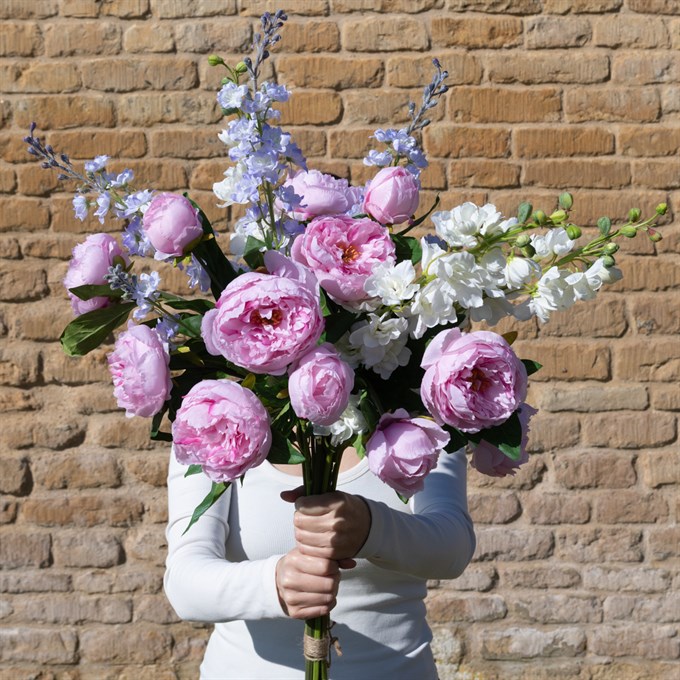
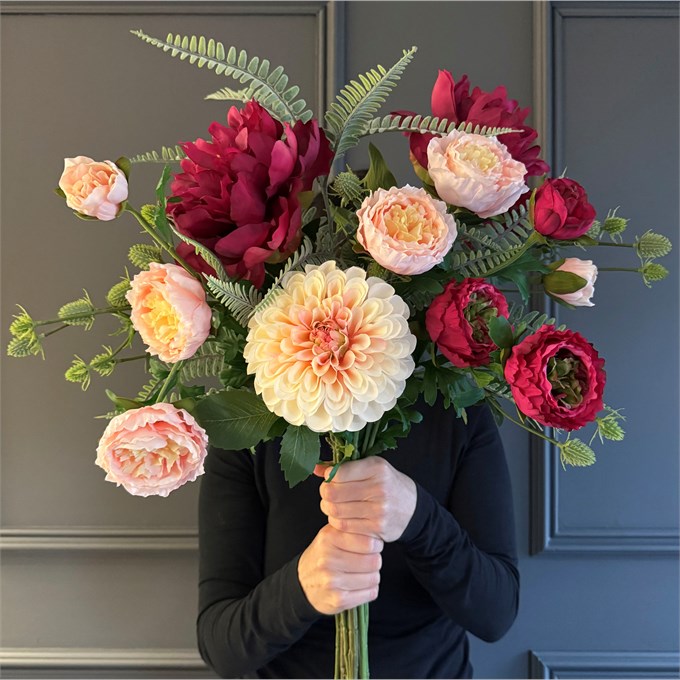
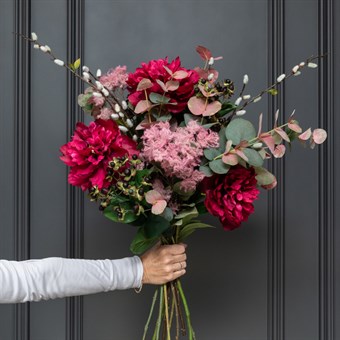
Our Burgundy Peonies and Scabiosa Bouquet follows this structure, with an added metallic asparagus spray to provide additional texture.

The same principles used in home décor and fashion can also be applied when assembling a bouquet. While flower arranging is naturally more flexible, a useful guideline is to aim for:
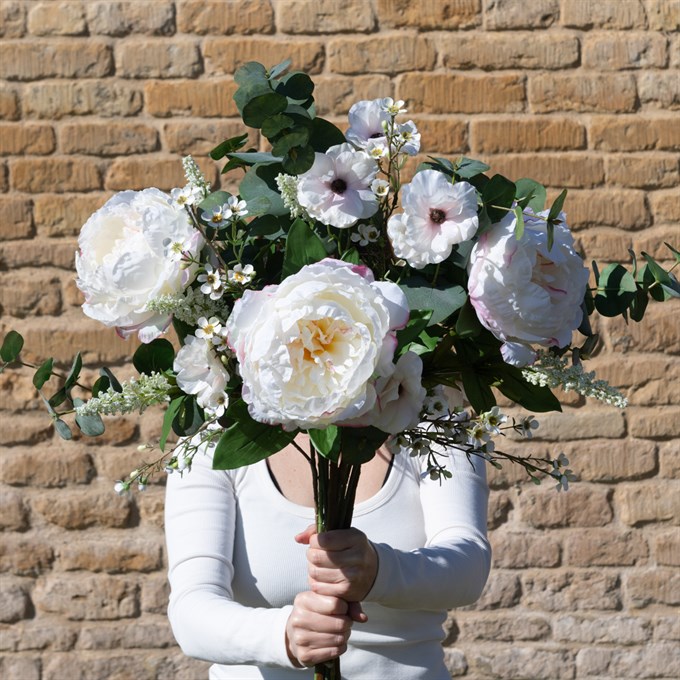
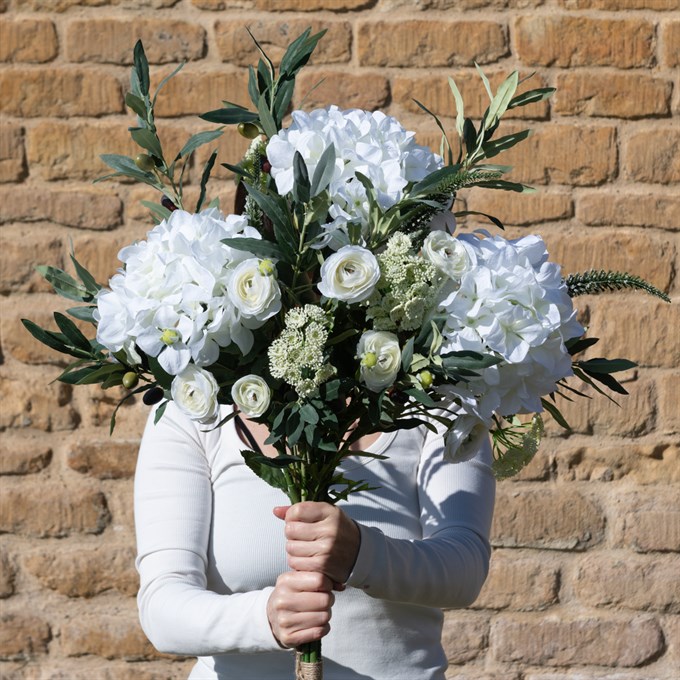
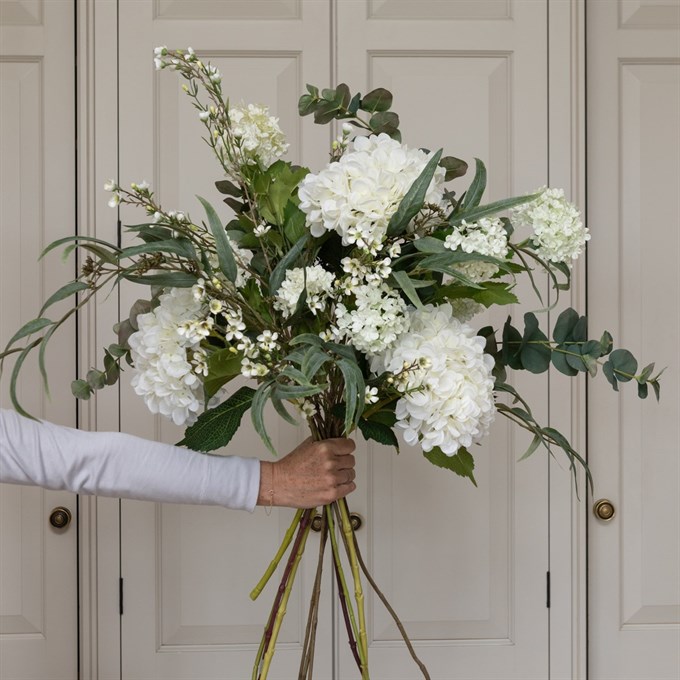
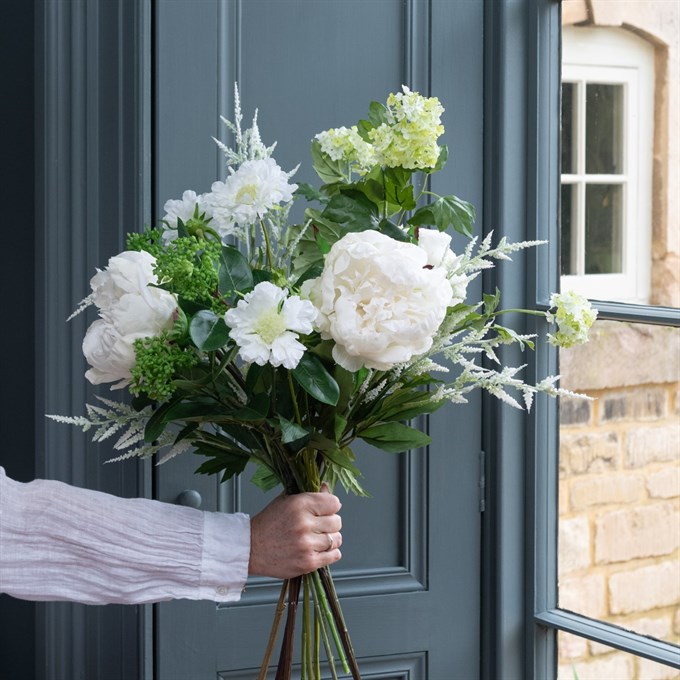
Alternatively, you can create interest through texture rather than colour. Our Faux White Rose and Wildflower Bouquet uses only white and green tones, while bishop’s flowers provide a contrasting texture for a beautifully balanced arrangement.
Start with your focal flowers, then gradually add your secondary flowers, fillers, and finish with foliage. Building your bouquet in stages makes it easier to spot any gaps and create a balanced arrangement.
Add stems one at a time and vary the height as you go to create a more natural, organic look.
For a florist-style arrangement, place the stems at slight angles and rotate the bouquet as you assemble it. This technique helps create a soft fan shape and ensures the bouquet looks balanced from every angle, especially if it will be carried or displayed openly.
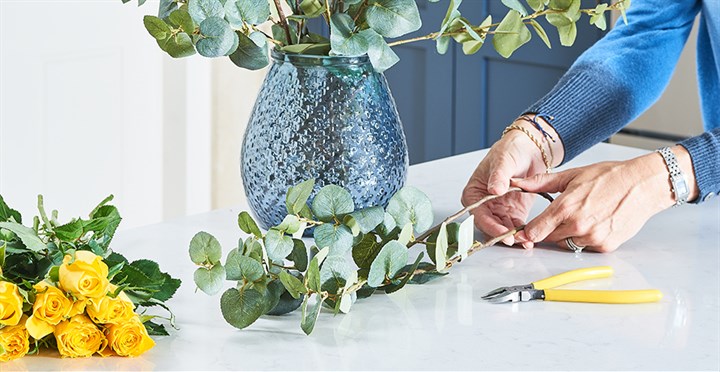
For bouquets placed in vases, it is easiest to assemble the arrangement within the vase as you go. This allows you to ensure all stems are at the correct height, and the flowers won’t move after being placed. For faux flowers in an opaque vase, bend the stems at their base to give you the required heights. For clear vases, or live flowers, you will need to cut the stems. Cross your stems as you place your flowers, as this will provide a more natural.
If you’re building a bouquet for it to be held, for example for a wedding, one tip is to use a vase simply to hold it during assembly, and then at the lip of the vase, tie the bouquet with string or ribbon. This keeps your assembly in place and keeps both hands free for the tying.
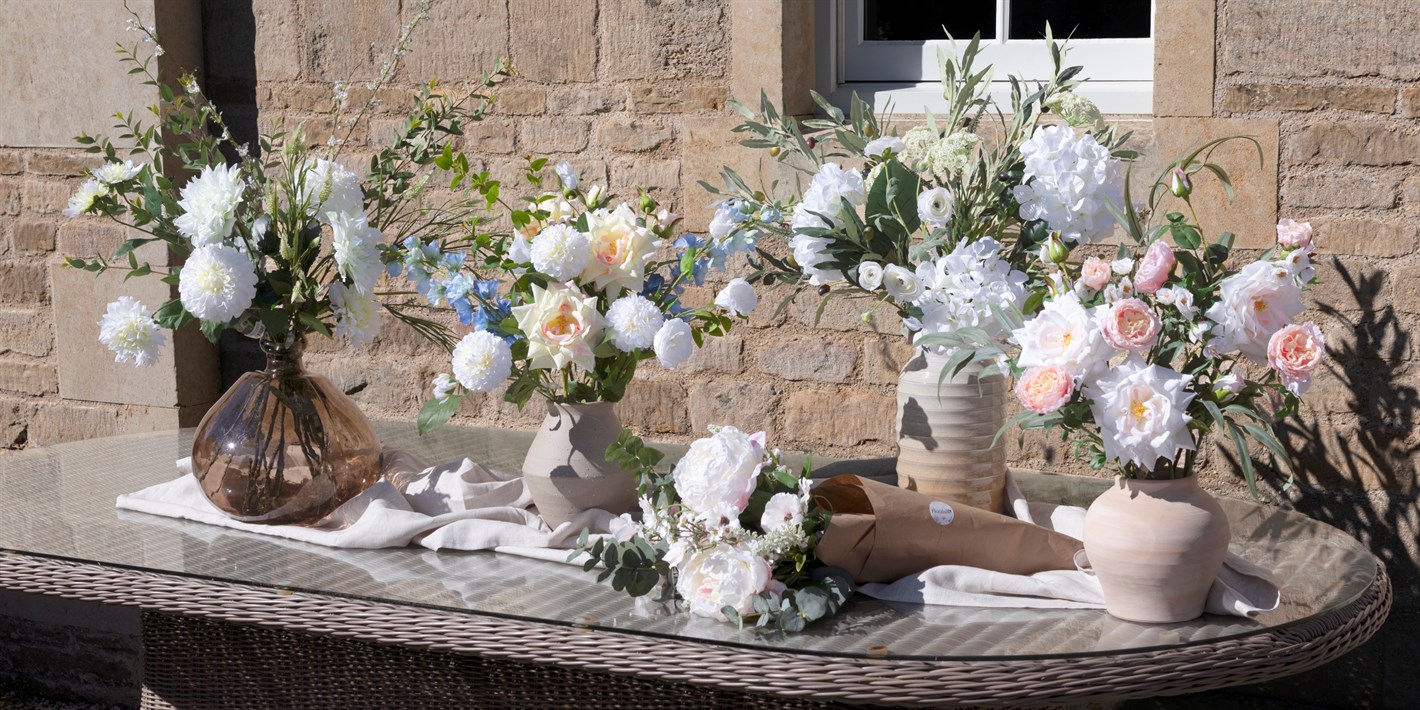
Once tied, use brown paper or gift wrap to give it that ‘just-from-the-florist’ feel. Fold the paper in half at an angle to make more points, and wrap it around the flower, securing with tape or stickers at the end. For an added touch, you could add tissue paper inside the brown paper itself, in the theme of the bouquet or the recipient.
Many people create bouquets to achieve the same look as fresh flowers. At Floralsilk, however, our realistic artificial flowers are designed to be arranged once and enjoyed for years as fuss-free décor or thoughtful long-lasting gifts.
Using faux flowers also gives you the freedom to combine blooms that would not naturally flower together, while easily updating your bouquet with the seasons. Bright spring and summer arrangements can be refreshed with richer autumnal tones and rustic textures as the seasons change.
Artificial flowers are especially ideal for beginners who are learning how to build bouquets. You can experiment with different styles and arrangements without worrying about damaging delicate petals or working against time.
While fresh flowers often last only around a week, faux flowers remain beautiful with minimal maintenance, making them a practical and long-lasting alternative.
Explore the Floralsilk Bouquet Inspiration Page , where we have created a range of bouquet ideas using our realistic artificial flowers and foliage.
Each bouquet includes guidance on the quantities of flowers and foliage used to create the arrangement shown. You can use these designs as inspiration, recreate the bouquet exactly, or adapt the structure to suit your own style and colour palette.
Alternatively, enjoy styling from Floralsilk's range of florist designed artificial flower bouquets.