Your front door is the first thing guests see at Christmas. The right wreath makes it feel welcoming before anyone knocks.
But choosing one is about more than picking what looks pretty online. Size, door colour and the style of your home all shape how a wreath looks once it's hung.
In this guide, we'll help you find a wreath that suits your door perfectly. We'll also answer the questions we're asked most: what size to buy, which wreaths look most realistic, how to hang one without damage, and how to keep it looking beautiful for years to come.
What size wreath do I need?
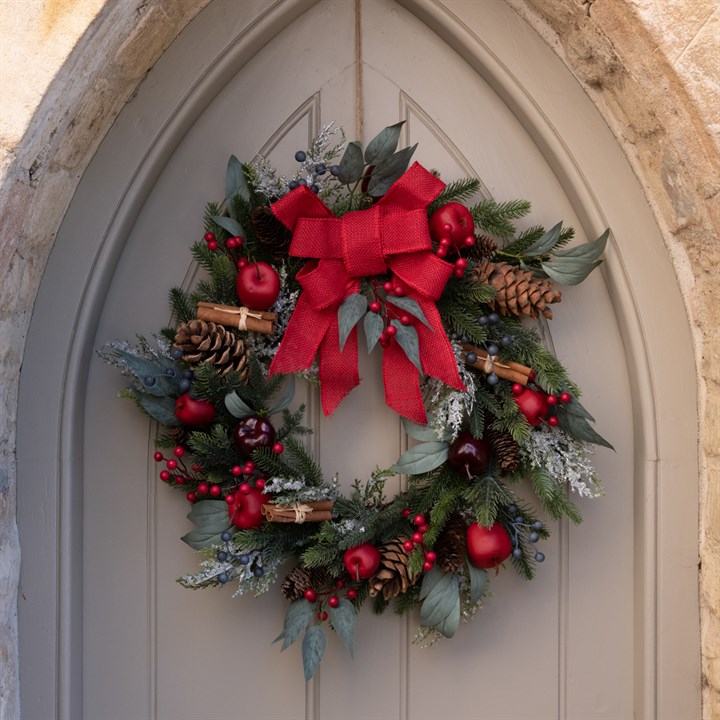
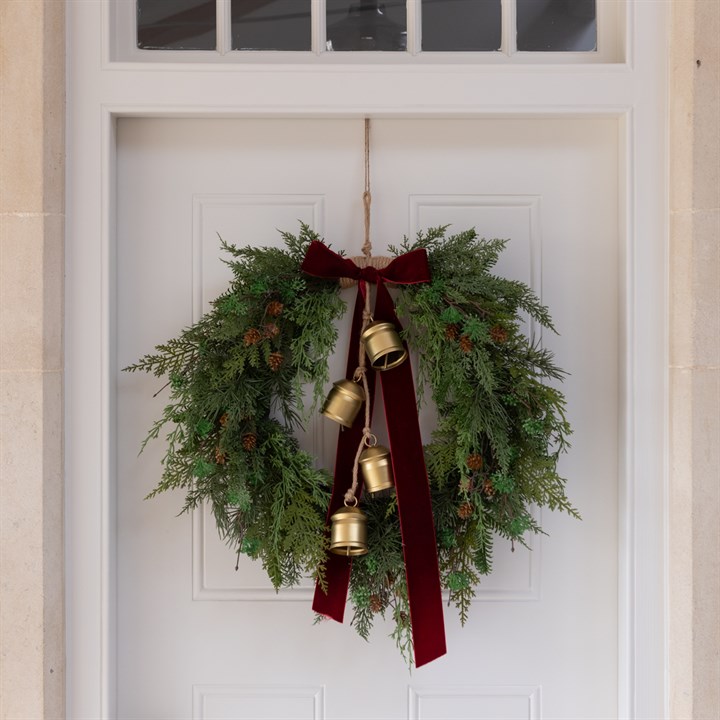
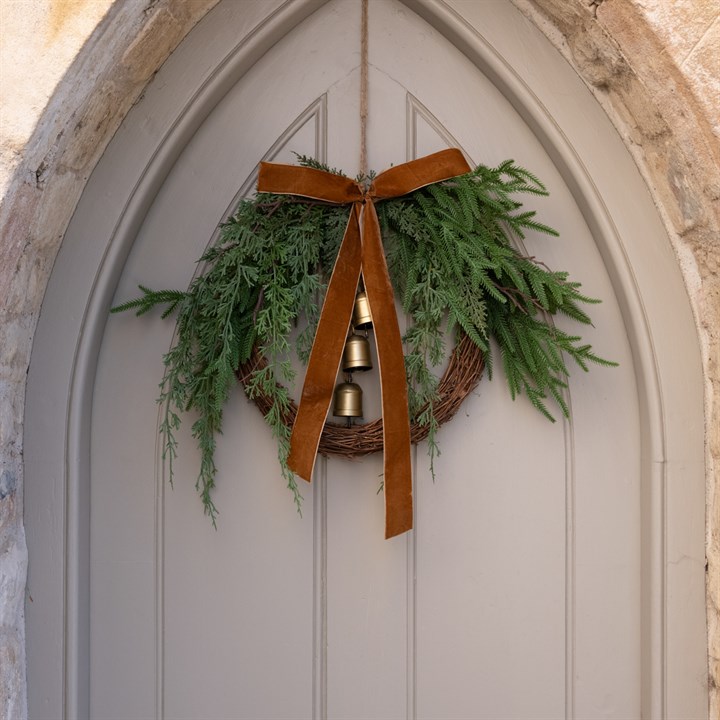
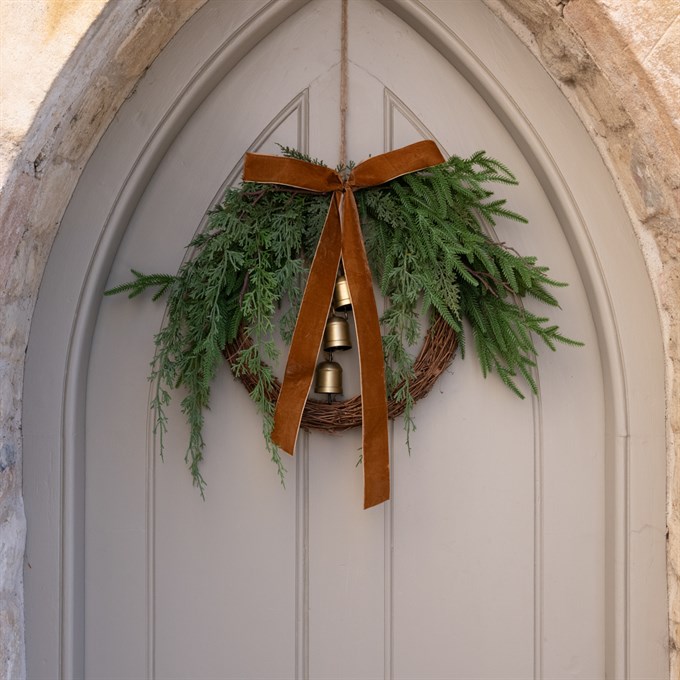
For most UK front doors, a wreath between 50cm and 60cm in diameter looks best. It's large enough to make an impression without overwhelming the door. There is a wide range of options to choose from here, such as the Faux Exton Apple & Cinnamon Wreath or the Duddington Rustic Wreath with Bells. For interior doors, windows and cupboards, we suggest a 30–40cm wreath to ensure that it fits, such as the charming Christmas Robin Wreath.
A simple rule helps: leave at least 10–15cm of door visible on either side of the wreath. Too small and it looks lost. Too large and it crowds the frame.
How to measure
1. Measure the width of your door, not the frame.
2. Check for letterboxes, knockers, glazed panels and door numbers. Your wreath should sit clear of them, or frame them.
3. Allow for depth. A full, lavishly decorated wreath can stand 15cm or more from the door, so check it won't catch on a storm door or porch.
Tip: Most wreaths look best hung with their centre roughly at eye level. On a panelled door, centring it in the upper panel gives a polished finish.
A white door is a blank canvas. Rich, deep greens look wonderfully crisp against it. Add red berries for a classic finish, or burgundy and plum tones for something more luxurious. Avoid heavily frosted or all-white wreaths, which can disappear against the paintwork.
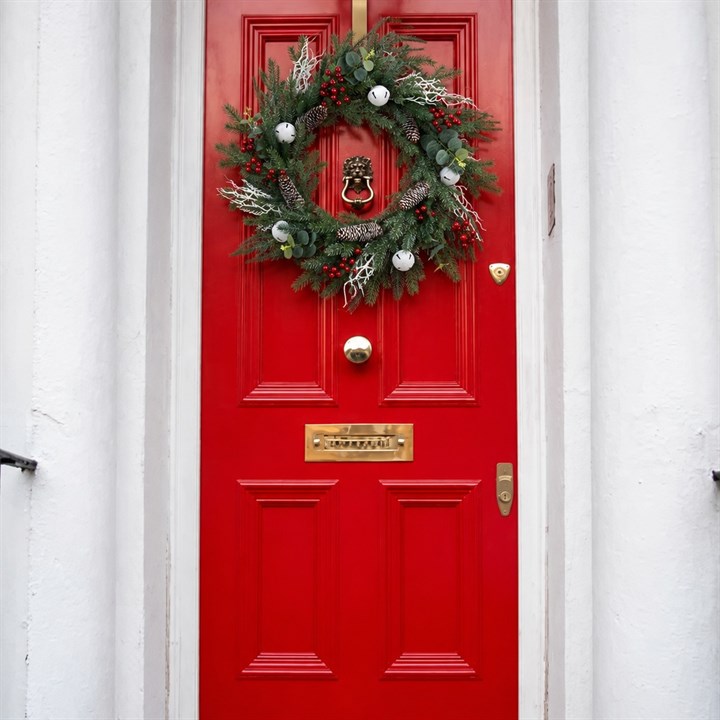
Red doors already feel festive, so let the greenery do the work. Choose a lush, natural green wreath with pine cones, gold accents or white berries. Skip red berries and red ribbon, which can clash or get lost.
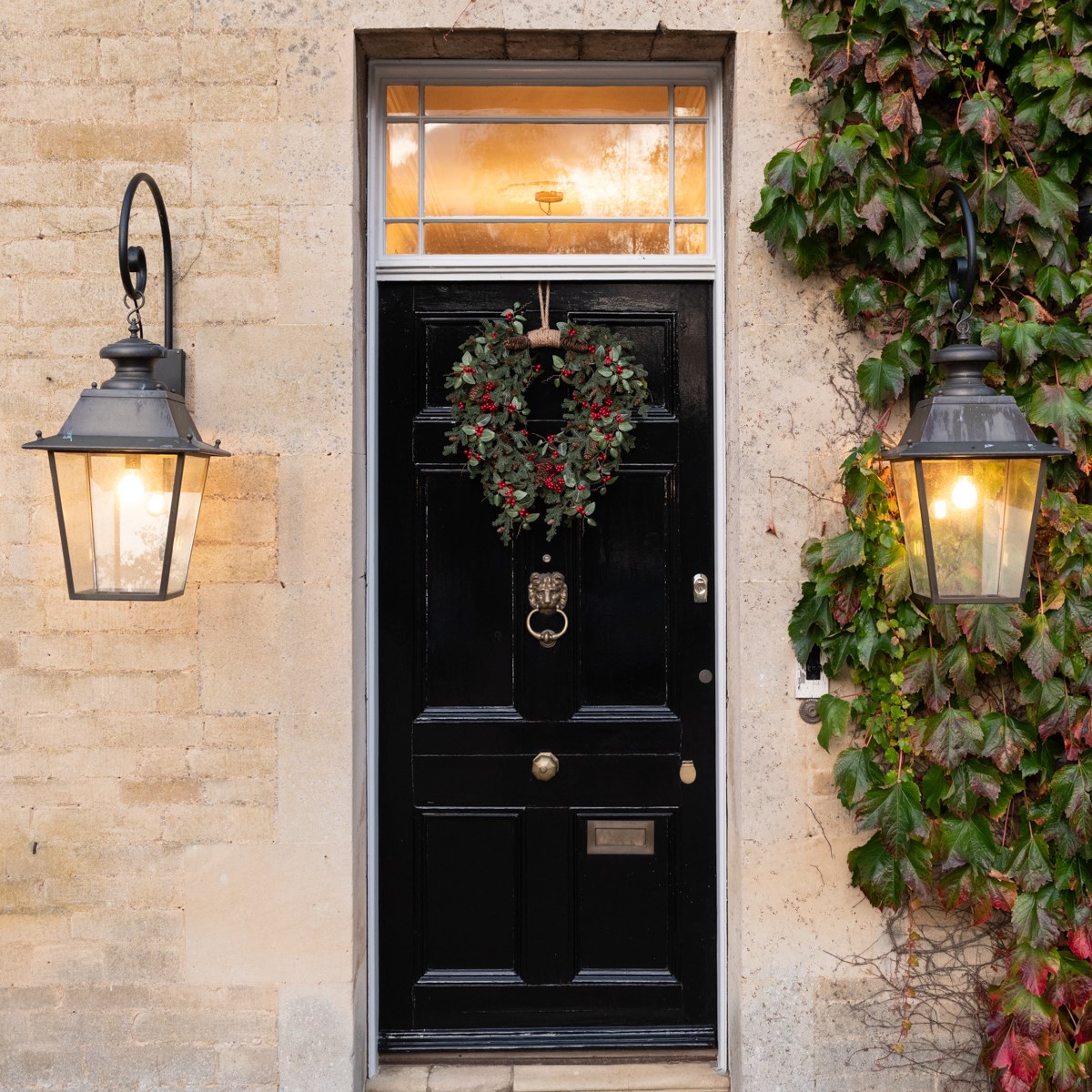
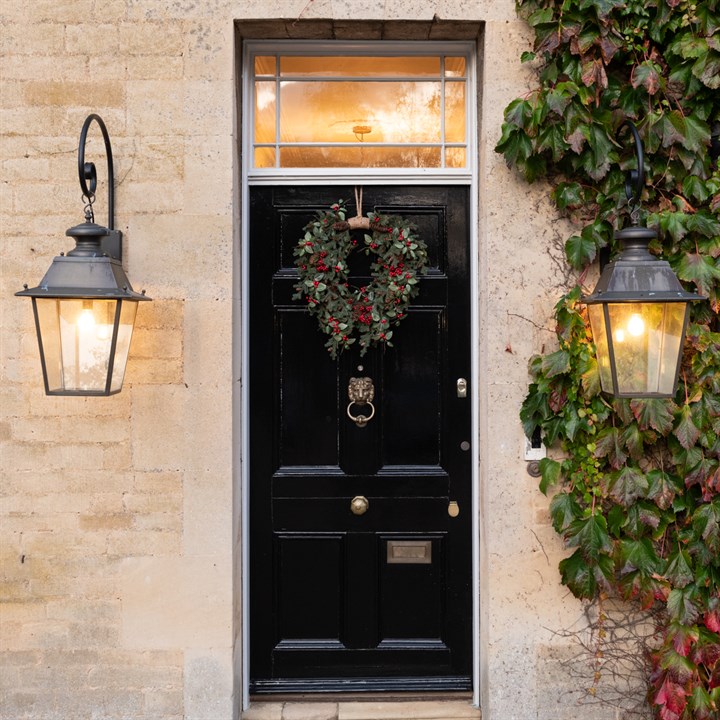
Black doors are dramatic and elegant. Almost anything shines against them. Frosted greenery, silver and white accents or bright red berries all create beautiful contrast. For a timeless look, try a full green wreath with a velvet ribbon in gold or cream.
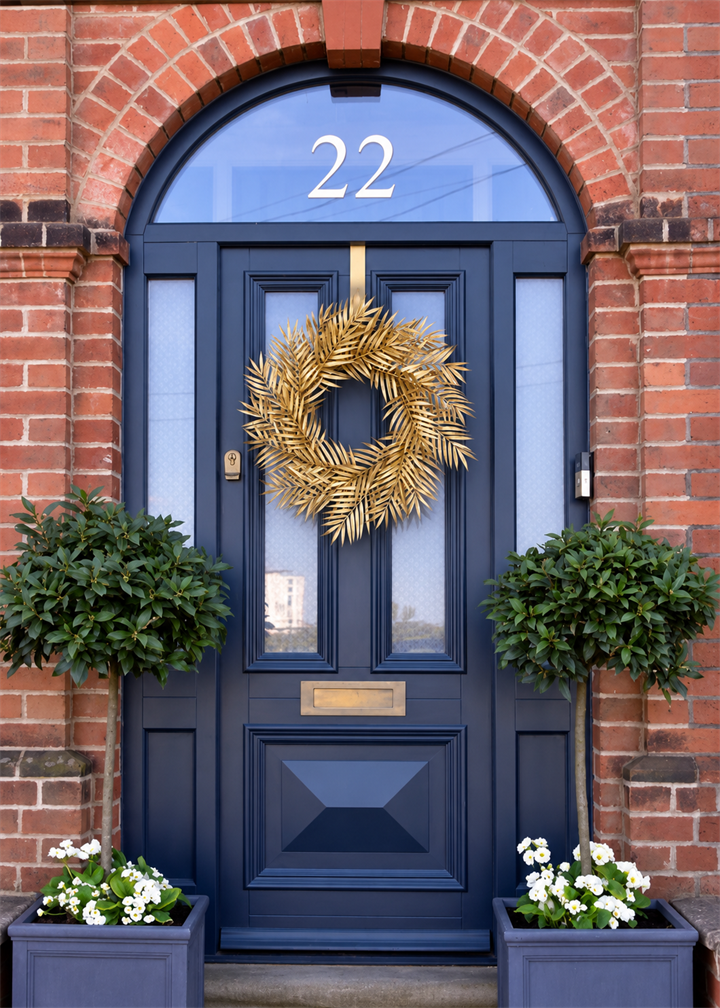
Navy pairs beautifully with metallic tones. Gold, copper and champagne accents feel warm and refined. Frosted foliage and white berries give a crisp, wintry look. Soft blush or burgundy adds warmth without clashing.
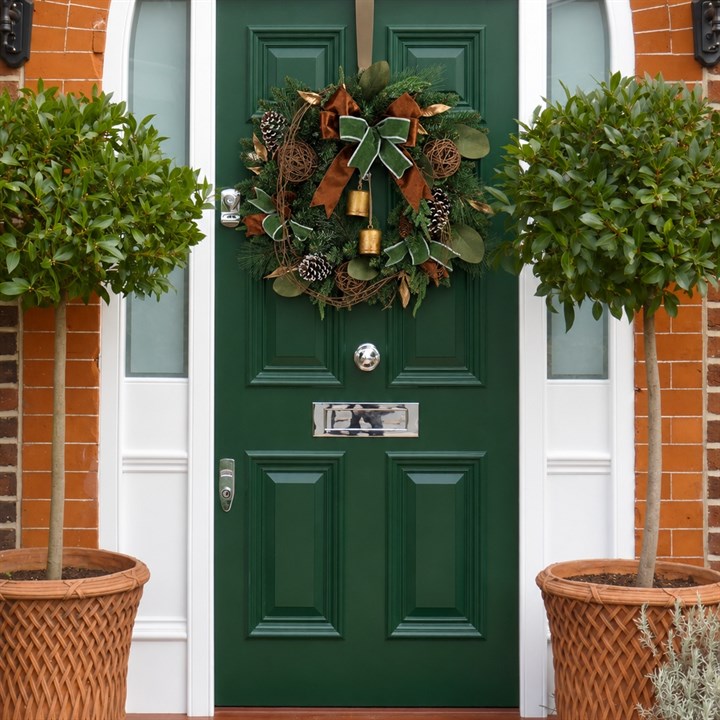
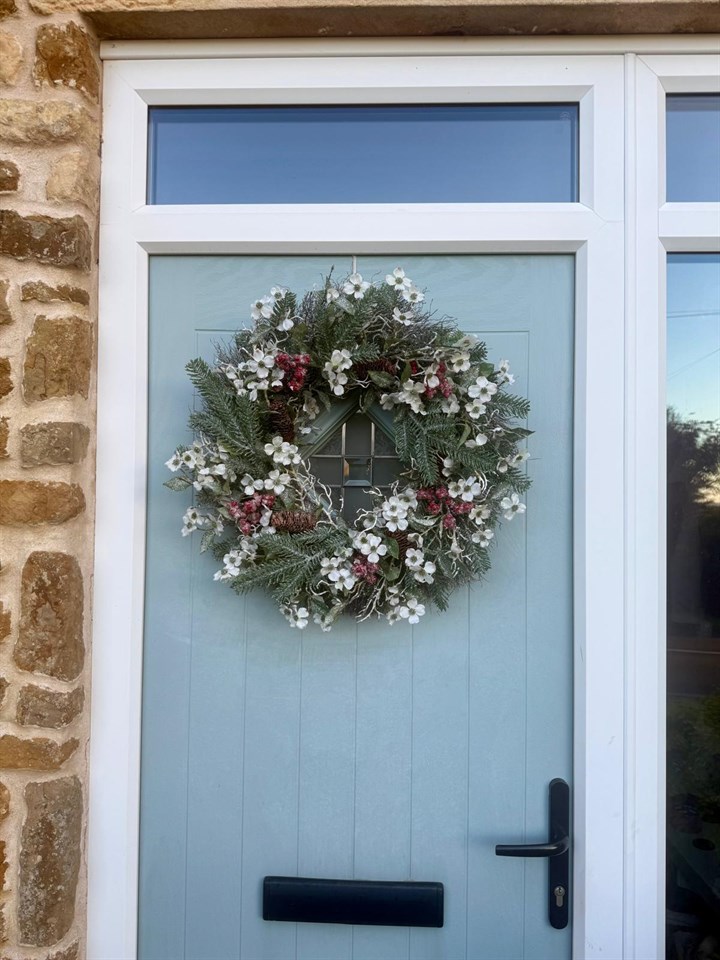
A green wreath on a green door can fade from view, so build contrast in. Look for frosted or snow-tipped foliage, eucalyptus in silvery tones, or wreaths rich in pine cones, dried orange and berries. Bold red, gold or cream decorations stand out best.
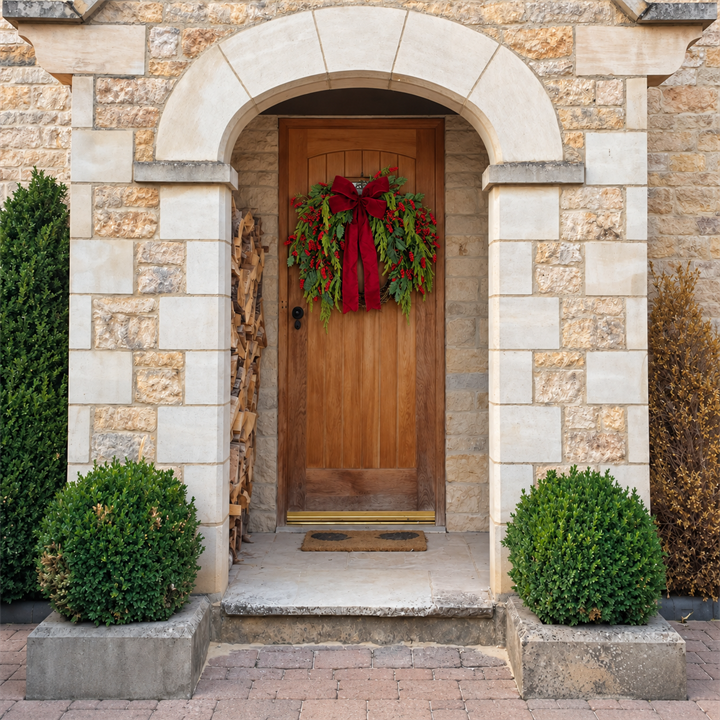
Natural timber suits rustic, woodland-inspired designs. Pine cones, twig bases, berries and seed heads echo the grain beautifully. Brighter greens and red berries lift a darker oak; frosted foliage works well on lighter woods.
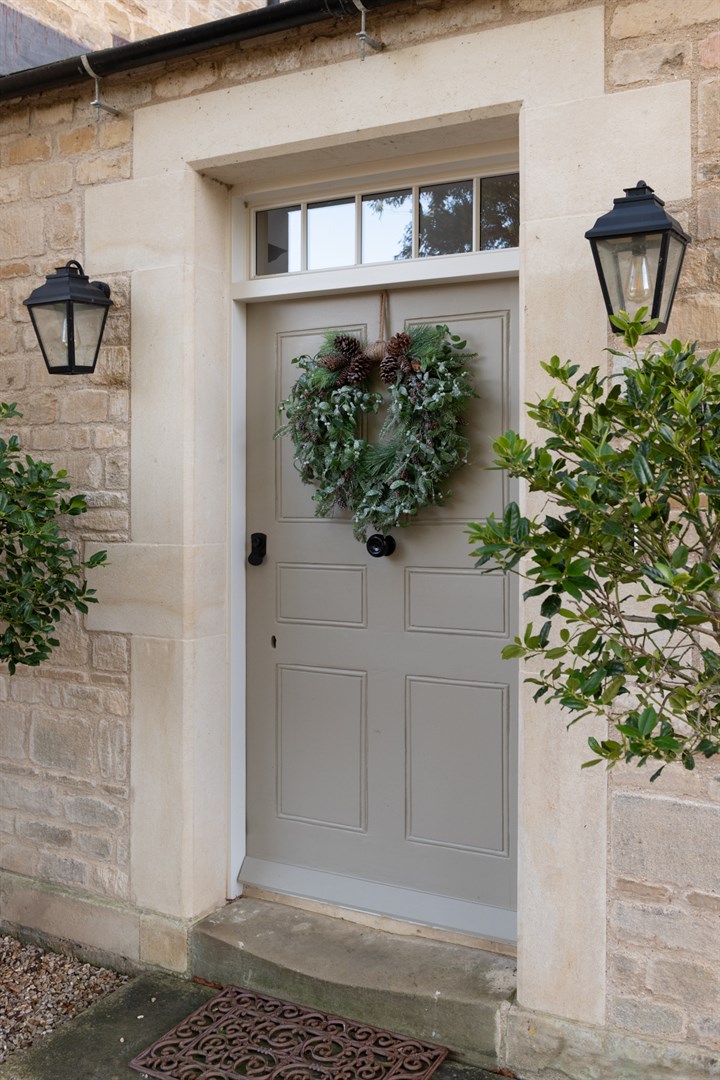
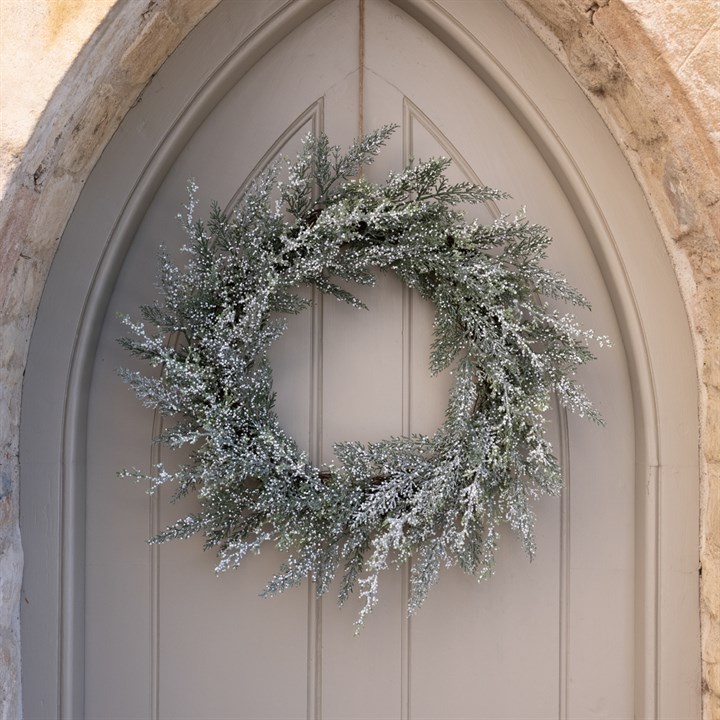
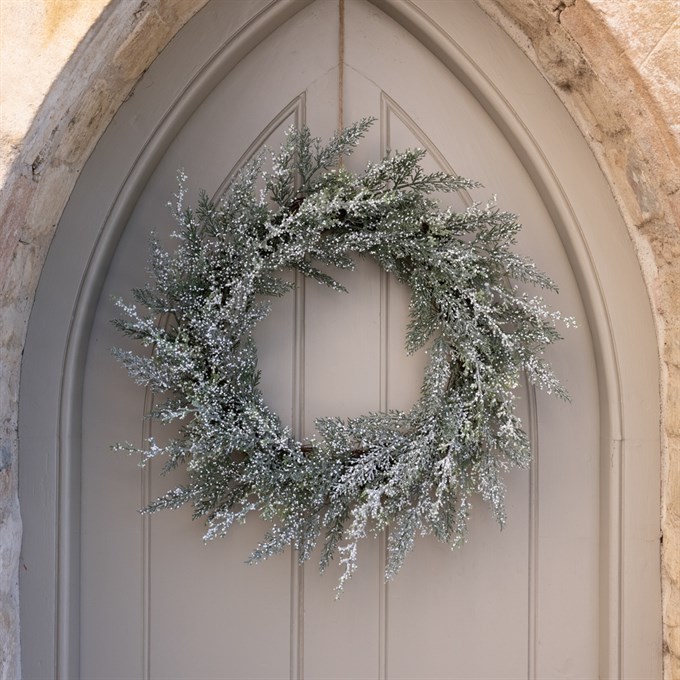
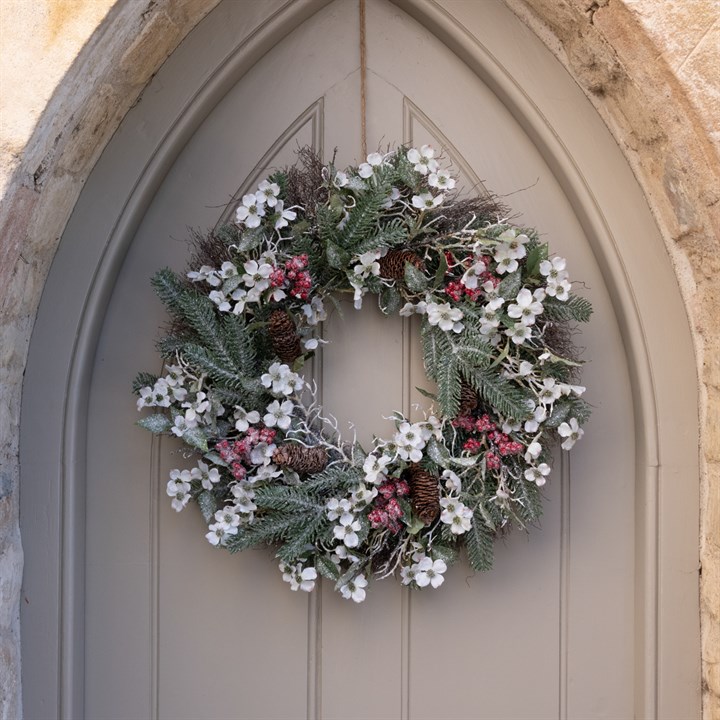
Grey is one of the UK's most popular door colours, especially on modern homes. Deep green and red work well, but it really suits contemporary designs. Try frosted greenery, silver-toned eucalyptus or copper accents.
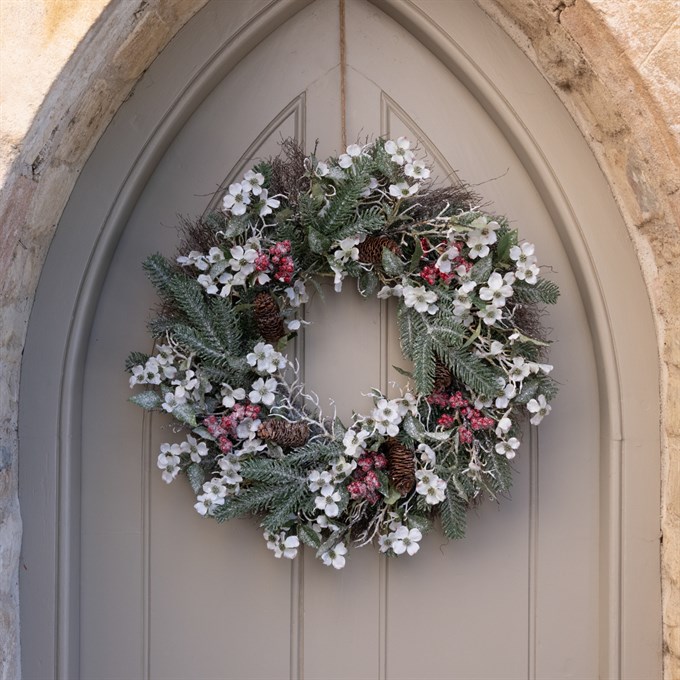
Soft, heritage shades call for gentle, natural wreaths. White berries, cream flowers, frosted pine and pale eucalyptus feel harmonious. A touch of dusky pink or soft gold adds charm.
Matching your wreath to your property style
Modern homes
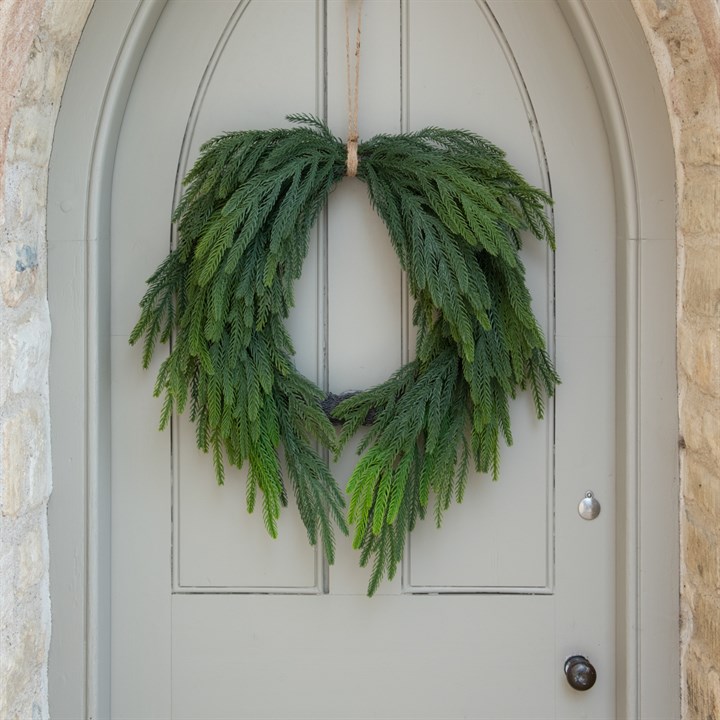
Clean lines call for pared-back designs. Choose a slim wreath with sculptural foliage, eucalyptus or frosted pine. Keep decorations minimal: a few cones, a single colour of berry, or none at all. Asymmetric and half-dressed wreaths feel fresh and contemporary.
Traditional homes
This is where the classic Christmas wreath comes into its own. A full, round wreath of mixed greenery, red berries and pine cones never goes out of style. Finish with a generous velvet or tartan bow.
Georgian homes
Georgian doors are all about symmetry and proportion. A perfectly round, full wreath sits beautifully on a panelled door. Choose refined, elegant decorations: gold accents, white berries, or deep burgundy. For grand entrances, add matching garlands around the doorframe or potted trees either side.
Victorian and Edwardian homes
These homes love a little opulence. Rich jewel tones, ornate ribbons and abundant decoration feel right at home. Where your door has stained glass, hang the wreath below or on a lower panel so it doesn't hide the detail.
Cottages
Cottage doors are often smaller, so a wreath of 40–50cm usually suits best. Look for natural, informal designs with twigs, pine cones, berries and a touch of dried orange. A loose, hand-gathered look feels charming and relaxed.
Farmhouse and country homes
Rustic textures shine here. Twig and willow bases, seed heads, cones and hessian or check ribbon all suit the setting. Pair your wreath with a matching garland over the porch for a warm welcome.
New builds
New build doors are often composite or uPVC in grey, black or white. Contemporary frosted or eucalyptus wreaths suit them well. Take extra care with hanging, as nails and screws can damage the door and affect any warranty.
Flats and apartments
A wreath brings Christmas cheer to a communal hallway too. Choose a slimmer design that won't catch passers-by, and check any building rules first. An artificial wreath is ideal indoors, with no dropped needles to clear up.
Which wreath looks most realistic?
The most realistic wreaths combine several types of foliage, varied textures and natural colour. Nature is never uniform, and the best artificial wreaths aren't either.
Here's what to look for:
Mixed foliage. A blend of pine, fir, spruce, cedar or eucalyptus looks far more natural than a single type of needle.
Subtle colour variation. Real foliage has lighter tips and deeper tones within. Look for gentle shading rather than one flat green.
Natural-looking decorations. Matte berries, textured cones and realistic seed heads look more convincing than glossy, uniform ones.
A light touch of frost. A delicate dusting feels wintry and real. Heavy, even flocking can look artificial.
Fullness and shape. A dense wreath with branches at slightly different lengths looks lush and hand-gathered. Wired branches let you shape and fluff it for a natural finish.
Tip: When your wreath arrives, spend a few minutes fluffing and shaping each stem. Bending some upwards and others outwards transforms how real it looks.
You don't need nails or screws to hang a wreath securely. In fact, they're best avoided, especially on composite and uPVC doors where they can cause lasting damage and may affect your warranty.
These are the best damage-free options:
Over-the-door hanger. A metal hook that sits over the top of the door. Choose a slim, flat design so the door still closes properly. Check it doesn't press on the seals of a composite or uPVC door, as this can cause draughts.
Adhesive hooks. Choose outdoor-rated hooks strong enough for your wreath's weight. Clean the surface first and apply them indoors or on a mild day, as many adhesives won't bond well in the cold. Leave them to set before hanging.
Ribbon from the top of the door. Loop a wide ribbon around the wreath, run it over the top of the door and secure it on the inside with a small adhesive hook. It's simple, secure and looks elegant.
Your door knocker. Tie a ribbon or wire loop to the knocker and hang the wreath beneath it. Keep it light enough that the knocker isn't strained.
Magnetic hangers. These work on steel doors only. Most composite doors have a non-metallic skin, so check before you buy.
Protect your paintwork. Stick a few small felt pads to the back of the wreath frame. They stop it scratching the door and keep it from rattling in the wind.
Beat the wind. On an exposed door, secure the bottom of the wreath with a second small adhesive hook or a discreet loop of clear fishing line.
How should I store my wreath?
Store your wreath clean, dry and uncrushed, somewhere cool and out of direct sunlight. Get this right and it will look just as beautiful next Christmas.
Clean it. Gently dust the foliage with a soft brush. Wipe decorations with a dry cloth.
Dry it thoroughly. If it has been outside, let it dry fully indoors before packing. Storing a damp wreath can lead to mildew and rust on the wire frame.
Remove batteries. Take the batteries out of lit wreaths to prevent leaks and corrosion.
Protect delicate details. Wrap berries, cones and ribbons loosely in acid-free tissue paper.
Choose the right container. A rigid wreath box or padded wreath bag keeps its shape. A large storage box with plenty of room works too.
Store it flat or hanging. Never stack heavy items on top. Hanging it from a hook inside a cupboard is ideal.
Pick the right spot. A spare room, under-bed space or cupboard is better than a loft or garage, where heat, cold and damp can fade and warp materials.
Next year, simply unpack it, fluff the branches back into shape and it's ready to hang.
How many years should a good-quality artificial wreath last?
With proper care, a good-quality artificial wreath should last for many Christmases, typically five years or more. Wreaths displayed indoors or under a sheltered porch often last considerably longer.
How long yours lasts depends on where it hangs, as strong sun, driving rain and wind all shorten a wreath's life. A sheltered spot makes a real difference. Furthermore, a wreath kept clean, dry and uncrushed will stay fuller and brighter for longer.
That's the real beauty of choosing artificial. A fresh wreath lasts a few weeks. A well-made artificial one becomes part of your family's Christmas for years, with no dropped needles and no need to replace it each December.
Whatever your door, there's a wreath to make it shine this Christmas. Explore our collection of luxury artificial Christmas wreaths, from classic berry designs to frosted, rustic and contemporary styles. Each is designed to look beautiful and last for years to come.
What size wreath is best for a standard front door?
For most UK front doors, choose a wreath between 50cm and 60cm in diameter. Leave at least 10-15cm of door visible on each side.
Which artificial wreaths look most realistic?
Look for a mix of foliage types, moulded needle tips, subtle colour variation and natural-looking berries and cones. A light frosting looks more convincing than heavy flocking.
How do I hang a wreath on a composite or uPVC door?
Use a slim over-the-door hanger, outdoor-rated adhesive hooks or a ribbon secured on the inside of the door. Avoid nails and screws, which can damage the door and may affect your warranty.
When should I put my Christmas wreath up?
Most people hang their wreath from late November or early December. Traditionally, it comes down on Twelfth Night, 5 January.
Can I use my wreath indoors?
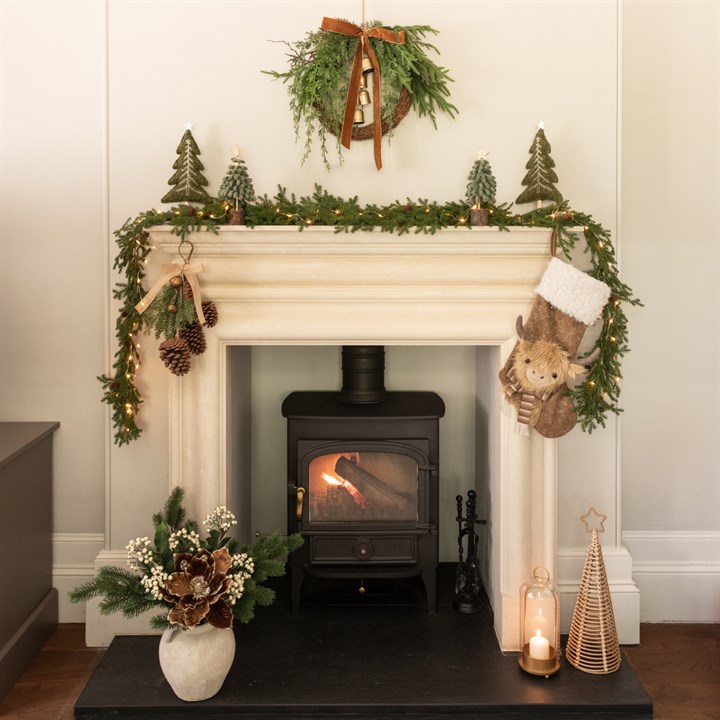
Absolutely. Artificial wreaths look lovely above a fireplace, on an interior door, or laid flat as a table centrepiece with a candle in the middle.
How do I make my wreath look fuller?
Fluff and shape each branch when you unpack it. You can also add extra picks, such as berries, cones or eucalyptus, to fill any gaps.